
Raider: Origin
4399 GamesAction
3.92.78K Reviews
- Version
- 1.32.9
- Installs
- 1.00M
- Age Rating
- Everyone 10+
Screenshots


Our Review of Raider: Origin
 Analysis by Appyee
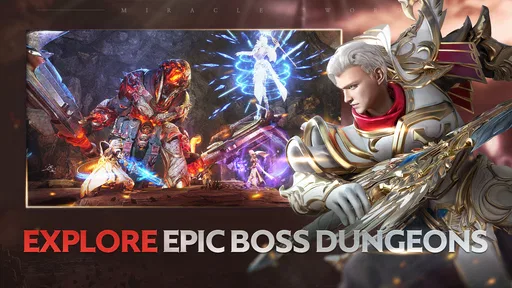
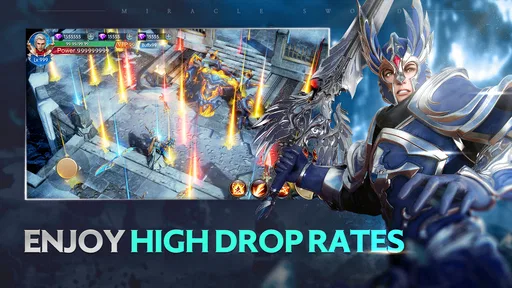
Raider: Origin is the kind of action RPG I open when I want a fantasy adventure that keeps moving without demanding a long, quiet session. I played it as a mobile-first experience, and my main impression is that its strongest quality is the way it turns sword-and-magic progression into a steady routine: enter a stage, fight through enemies, improve the character, and return with a clearer sense of what to try next. That rhythm is easy to understand, but it also reveals the game’s limits. It is more comfortable as a regular pick-up-and-play adventure than as a deeply tactical role-playing game.
Developed by 4399 Games, the game is free to download and sits in the action category, with an Everyone 10+ age rating. Its fantasy setting gives the combat a familiar shape, while the RPG structure supplies the longer-term reason to keep playing. I found it approachable enough for someone who does not normally spend time learning complicated mobile systems, yet there is enough character growth to make short sessions feel connected rather than disposable.
The public reception is mixed but substantial: it holds an average rating of 3.9 from around 28 thousand ratings, with roughly 2.8 thousand written reviews and over one million installs. Those figures suggest a game with a real audience, though not one that will satisfy every type of action fan. My recommendation depends less on whether you enjoy fantasy combat in general and more on whether you like watching a character become stronger through repeated, compact play sessions.
The progression loop that gives Raider: Origin its identity
The capability I kept noticing most was the game’s ability to make continuous character progression the center of the experience. Instead of treating battles as isolated encounters, it connects fighting, rewards, equipment improvement, and the next challenge into one ongoing loop. That sounds simple, but it changes how the game fits into a day. I could play for a short while, make a useful improvement, and stop without feeling that I had abandoned a complicated quest halfway through.
In practice, the sword-and-magic theme is less about carefully choreographing every attack and more about maintaining momentum. The appeal comes from seeing the character handle tougher enemies after a few upgrades, then deciding whether to push onward or spend time strengthening the current build. This makes the game immediately readable. You are not required to understand a large fantasy universe before the action begins; the next fight and the next improvement provide enough direction.
That focus also separates it from traditional console-style action RPGs. In a more deliberate alternative, I might expect every dodge, combo, and enemy pattern to demand close attention. Here, the broader satisfaction comes from the relationship between combat and growth. The question is often not only “Can I defeat this enemy?” but “What part of my character should I improve so the next attempt feels better?” Players who enjoy incremental optimization will understand the attraction quickly.
The real strength is the short progression cycle: combat gives the character a reason to improve, and improvement gives the next battle a purpose. It is a useful design for mobile play because it creates frequent stopping points. I do not need to reserve an entire evening to feel that I have accomplished something, although longer sessions are still possible when I want to keep advancing.
What the loop feels like during ordinary play
My usual approach was to begin with a quick check of the current objective, enter the available combat, and pay attention to whether the character was keeping pace with the enemies. When progress slowed, I treated that as a signal to review upgrades rather than automatically blaming the stage. This habit matters because the game’s challenge is tied closely to progression. A small improvement can make an encounter feel manageable, while ignoring character development can make the same action feel repetitive.
I also found it helpful to separate “I am stuck” from “I am underdeveloped.” In a highly skill-based action game, failure usually tells me to change my timing or learn a pattern. In Raider: Origin, failure can instead indicate that I should spend more time with the RPG side. That is not a flaw by itself, but it means players looking for pure reflex testing may find the answers less satisfying.
The most practical tip I can offer is to avoid spending every reward immediately on the first visible improvement. I had a better experience when I paused to consider whether the next obstacle demanded more damage, more durability, or a generally stronger character. Even without turning the game into a spreadsheet, that small moment of planning makes the progression feel more personal and prevents the routine from becoming a blind sequence of taps.
Another useful habit is to treat a failed attempt as information. If the character survives comfortably but takes too long to finish enemies, offensive growth is probably the more sensible direction. If the character drops quickly, defensive improvement may have greater value. This simple distinction gives the RPG layer more meaning than merely pressing an upgrade button whenever one appears.
Why the fantasy presentation helps, and where it falls short
The sword-and-magic setting is familiar, but that familiarity works in the game’s favor. I never needed to decode an unusual premise before understanding what the character was doing. The fantasy framing also gives the progression a natural visual purpose: stronger equipment and abilities feel connected to becoming a more capable adventurer, not just to raising an abstract number.
At the same time, players who want a rich role-playing story should moderate their expectations. The game’s most convincing communication comes through action and advancement, not through the kind of detailed character writing or world exploration associated with larger role-playing productions. I would choose it for a compact fantasy combat routine, not as a replacement for a narrative-heavy adventure.
This distinction is important when comparing it with the usual alternatives. A competitive action game may offer sharper moment-to-moment pressure, while a classic role-playing game may provide deeper dialogue, exploration, and party decisions. Raider: Origin occupies a middle space: it uses RPG growth to make action sessions matter, but it does not need to become a fully complex role-playing simulation to deliver its main appeal.
How I would use it in a normal day
Imagine having a commute, a lunch break, or a few minutes while waiting for an appointment. I would use this game when I wanted more structure than a quick arcade round but less commitment than a long story mission. I could advance through a combat section, improve the character, and stop at a natural point. Later, I could return with a clear goal instead of trying to remember a complicated chain of events.
That scenario shows why the progression capability matters more than the fantasy label alone. The game is not simply giving me enemies to defeat; it is giving each brief session a place in a longer climb. For a player who enjoys checking progress every day, that can be more compelling than a game with better individual battles but no satisfying sense of accumulation.
There is a trade-off, however. The same repeatable structure that makes short sessions convenient can feel predictable when played for too long. I noticed that the excitement depends heavily on whether a new improvement or challenge is close enough to keep the loop fresh. If I played without a personal target, the routine could start to feel like maintenance rather than adventure.
Free access and the pressure of optional spending
The game is free, which makes it easy to try the central combat and progression without committing money at the beginning. It also includes in-app purchases ranging from $0.99 to $99.99 per item. That wide range is worth keeping in mind before starting, especially if you are prone to spending when progress slows or when a stronger upgrade appears tempting.
I would approach the purchase system with a simple rule: decide in advance whether you are playing as a free user or allowing yourself a fixed entertainment budget. The progression loop is most enjoyable when improvements feel earned through play. If every obstacle immediately leads to thoughts about buying an advantage, the game’s main strength can turn into its main source of frustration.
This is also where it differs from a straightforward premium action game. A paid game usually asks for money before play and then tends to frame progression around the designed adventure. A free-to-play RPG gives you easier access, but it requires more awareness about how you respond to optional purchases. For me, the free entry point is a genuine benefit, provided I keep spending separate from the moment-to-moment decision of whether my character is ready for the next challenge.
Parents should also consider the Everyone 10+ rating when deciding whether the game suits a younger player. The fantasy combat is clearly aimed at a broad audience, but the presence of in-app purchases makes device and account settings worth checking before handing it over. That is practical preparation, not a criticism of the game itself.
Device expectations and the importance of the current build
The listed minimum operating system is Android 4.1, so the game is designed with broad Android compatibility in mind. Its current version is 1.32.9. I would still treat compatibility as a starting point rather than a guarantee of an identical experience on every phone. Older hardware may handle a combat RPG differently from a newer device, particularly during longer sessions.
For a smoother routine, I would keep enough free storage for the installation and updates, close unnecessary background apps, and avoid judging the game after only a rushed first launch. These are ordinary mobile habits, but they matter more in a progression-based game because interruptions can make the combat loop feel less coherent. If your phone is very old or struggles with other action games, a lighter alternative may be a better fit even though the stated operating-system requirement is broad.
I would also recommend trying the game on the device you expect to use most often before investing in purchases. A title can be enjoyable in principle but awkward if the screen feels crowded, the controls do not suit your hands, or the phone becomes uncomfortable during longer play. Since the game’s appeal depends on returning repeatedly, comfort matters more than it would for a one-time experiment.
Who benefits most from the progression design
The best match is a player who enjoys visible growth and likes having a reason to return after a short break. If you enjoy fantasy heroes, repeated combat, and the satisfaction of turning a previously difficult encounter into a manageable one, the structure should feel natural. You do not need to be an expert in role-playing games; the basic loop is accessible, and the deeper value comes from gradually making better choices about improvement.
It is particularly suitable for someone who wants a bridge between an action game and a role-playing game. You receive the immediate feedback of fighting enemies, but your decisions continue beyond the current battle. That combination can make a few minutes feel productive without requiring the detailed planning found in more demanding RPGs.
I would be more cautious about recommending it to someone who wants precise, skill-dominant combat above everything else. If your favorite mobile games reward perfect timing, complex combos, or competitive mastery, the progression layer may feel as though it softens the importance of individual performance. Likewise, players searching for a large, story-led fantasy world may prefer a game built around exploration and narrative choice rather than repeated advancement.
It may also be the wrong choice for anyone who dislikes free-to-play economies on principle. Even when you intend to spend nothing, the existence of purchases can affect how you perceive slow progress. A premium alternative may offer a calmer relationship with advancement, while a competitive title may provide a stronger reason to focus on immediate mechanical skill. Raider: Origin is best when you accept its hybrid identity instead of expecting it to behave like either of those options.
Small decisions that make the experience better
My first practical suggestion is to establish a stopping point before beginning a session. Because the loop is built around one more battle and one more improvement, it is easy to continue without a clear purpose. Choosing a target, such as reaching the next meaningful upgrade or testing whether a particular weakness has improved, keeps the session focused and makes progress easier to judge.
Second, do not confuse a higher combat result with a better long-term choice. A quick improvement may help immediately, but saving resources for a more useful change can make later stages less frustrating. I found the game more interesting when I treated rewards as decisions rather than automatic confirmations.
Third, use the game’s compact structure to learn your own preferences. Some sessions can be about pushing forward, while others can be about strengthening the character. Alternating those goals prevents the experience from becoming a single repetitive task. It also helps reveal whether you actually enjoy the RPG side or are only continuing because the next reward is close.
Finally, be honest about what keeps you engaged. If the pleasure comes from steady growth, the game has a clear reason to stay installed. If you find yourself skipping the combat mentally and only waiting for upgrades, that is a sign that a different action game may serve you better. The progression system is the heart of this experience, so your reaction to that system should guide the decision.
My recommendation after spending time with it
Raider: Origin works because it makes advancement feel like the bridge between short mobile sessions and a longer fantasy journey. I liked being able to return, fight, improve, and leave with a concrete sense of movement. The game’s strongest capability is not a single spectacular battle feature; it is the way the sword-and-magic action is organized around a repeatable growth cycle that fits ordinary phone use.
That design also defines the boundaries of the recommendation. I would suggest it to friends who want a free action RPG with an easy entry point, regular character improvement, and enough structure to make brief sessions worthwhile. I would not suggest it to someone seeking a premium, story-focused adventure or a purely reflex-based combat test. The optional purchases, the potential repetition, and the reliance on progression as motivation deserve serious consideration.
With its 2019 release, broad Android support, current version 1.32.9, and a sizeable installed audience, it remains an accessible game to try rather than a niche experiment. My final view is positive but specific: choose it for the satisfying routine of turning repeated battles into steady character growth, and skip it if that routine sounds more like grinding than adventure. When approached on those terms, the game has a clear purpose and can earn a regular place in a fantasy-loving player’s mobile rotation.
Verdict
Strengths of Raider: Origin
- Fast-paced combat with responsive controls and flashy skill effects.
- Large world map with plenty of quests, enemies, and exploration areas.
- Many character classes and equipment options support different play styles.
- Frequent rewards make early progression feel quick and satisfying.
- Offline-friendly features let you play in short sessions without constant access.
Limitations of Raider: Origin
- Heavy grinding becomes noticeable once the early progression boost fades.
- Auto-battle can make encounters feel repetitive and less interactive.
- The interface can feel crowded with menus, events, and upgrade systems.
- Higher-level upgrades may require substantial time or premium resources.
- Device performance may suffer during busy battles with numerous effects.
Similar Picks in This Category
View All
Temple Run 2: Endless Escape
Imangi Studios4.1

PUBG MOBILE
Level Infinite4.3

Free Fire: 9th Anniversary
GARENA INTERNATIONAL I4.4

Talking Tom: Hero Dash Run
Outfit7 Limited4.3

slither.io
Lowtech Studios3.9

Sniper 3D:Gun Shooting Games
Wildlife Studios4.6
Frequently Asked Questions
What is Raider: Origin, and what kind of gameplay does it offer?
Raider: Origin is a mobile action MMORPG that combines character progression, real-time combat, quests, equipment upgrades, and online social features. You create a hero, explore a fantasy world, fight monsters and rival players, complete missions, and improve your power through gear, skills, mounts, and companions. The game is designed for players who enjoy fast progression and frequent activities rather than a slow, story-focused role-playing experience.
Can Raider: Origin be played offline?
No, Raider: Origin is primarily an online game and requires an active internet connection for most of its content. Your character data, quests, rewards, events, and multiplayer activities are connected to the game’s servers. A stable Wi-Fi or mobile-data connection is recommended, especially during battles and competitive modes. Playing over a weak connection may cause loading problems, disconnections, or delayed combat responses.
Is Raider: Origin free to download and play?
Raider: Origin can generally be downloaded for free, but it includes optional in-app purchases. These purchases may provide currency, upgrade materials, cosmetic items, progression advantages, or limited-time packages. You can play through a substantial amount of the game without paying, although progression may feel slower later on. Parents should also review purchase settings if children use the device.
Does Raider: Origin support multiplayer and PvP features?
Yes, multiplayer is an important part of Raider: Origin. Depending on the available version and server activities, players can join guilds, cooperate with others, participate in events, and compete in player-versus-player modes. These features add variety beyond the main quests, but they may also require stronger characters and regular participation. Server population and available activities can vary by region and account progress.
What should I know about device requirements and account progress before installing?
Before installing Raider: Origin, make sure your Android or iOS device has enough free storage and that its operating system is supported by the current release. The game may download additional files after installation, so extra space is useful. Because progress is usually linked to an online account or server, it is wise to connect the game to an available login method and avoid deleting app data before confirming that your character is backed up.
Play our best games!


